Reflecting on the Past, Shaping the Future
Every meaningful journey begins with reflection. For organisations working to improve the lives of children and communities, the future cannot be shaped through planning alone—it must emerge from lived experiences, collective wisdom and a shared commitment to creating lasting change. At Children of India Foundation (CIF), strategic planning is not merely about setting organisational priorities; it is about listening to the voices of those working closest to children, understanding the realities faced by communities, and building a vision that is both ambitious and grounded in experience.
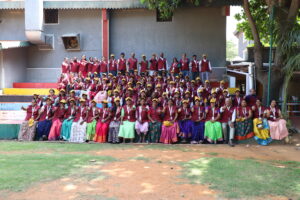
With this spirit, Children of India Foundation organised a four-day Strategic Planning Workshop from 26 to 29 June 2026 at Ramee Guestline, Bengaluru, bringing together employees from Andhra Pradesh, Telangana, Karnataka, Tamil Nadu and Jharkhand. The workshop marked the beginning of the participatory development of the organisation’s Strategic Plan 2026–2031, creating a space where staff from diverse programmes and regions could collectively reflect on the organisation’s journey, celebrate achievements, discuss emerging challenges and envision the future of child-centred development.
The event was built around a simple but powerful belief—that those who work alongside children and communities every day possess invaluable knowledge about what works, what needs improvement and what the future should look like. Through interactive discussions, storytelling, collaborative exercises and thematic group work, participants contributed ideas that will help shape the next chapter of CIF’s mission.
Celebrating a Year of Impact
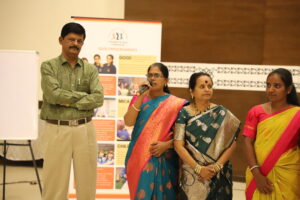
The workshop began with activities designed to encourage interaction and strengthen connections among participants from different states and programmes. As colleagues introduced themselves and shared their experiences, the diversity of the organisation became immediately evident. Despite working across varied geographical, cultural and social contexts, participants were united by one common purpose—ensuring that every child has the opportunity to live a safe, healthy and dignified life.
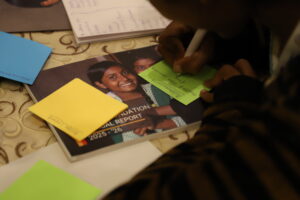
The opening sessions also encouraged participants to reflect on CIF’s journey over the years, understand today’s rapidly changing social landscape and collectively determine the organisation’s future priorities. This reflection was supported by a review of the Children of India Foundation Annual Report 2025–26, highlighting the organisation’s continued commitment to protecting, empowering and enabling vulnerable children and communities across India.
During the year, CIF reached more than 21,445 children and adolescents while engaging with over 35,299 families and community members across five states, working in 37 districts and more than 1,000 villages, slums and urban settlements. These achievements were made possible through programmes such as GOOD for Sustainable Future, MICA, Miss Collect, CCCEP and DtZ-SUFASEC, each addressing different aspects of child protection, education, adolescent empowerment, community development and the prevention of exploitation and harmful practices.
Beyond these impressive figures, participants recognised that every statistic represented an individual child, a family overcoming adversity or a community taking collective action to protect its children. This understanding reinforced the importance of sustaining and strengthening the organisation’s work in the years ahead.
Reflecting on Achievements That Matter
One of the workshop’s most engaging sessions invited participants to reflect on five major thematic areas that define CIF’s work:
- Health
- Education
- Livelihoods
- Child Protection
- Organisational Growth
Rather than focusing solely on programme outputs, participants were encouraged to discuss three simple yet meaningful questions:
- What achievement are you most proud of?
- What moment do you remember most?
- What is the most important lesson you have learnt?
These discussions highlighted not only the organisation’s accomplishments but also the dedication and resilience of staff members who work directly with children and families.
Health: Promoting Well-being Beyond Healthcare
Participants reflected on numerous health initiatives that have improved the well-being of vulnerable communities. Medical camps, menstrual hygiene awareness programmes, handwashing campaigns and community health awareness sessions were recognised as significant achievements that have contributed to healthier communities.
Several participants spoke about organising specialised health camps for women from Devadasi communities, distributing hygiene kits during the COVID-19 pandemic and connecting vulnerable families with government healthcare schemes. These interventions demonstrated that promoting health extends far beyond medical treatment—it also involves awareness, prevention, dignity and access to public services.
An equally valuable lesson emerging from these discussions was the importance of collaboration. Working closely with government departments and healthcare providers has enabled communities to access services that might otherwise remain beyond their reach.
Education: Opening Doors to Opportunity
Education emerged as one of the most inspiring themes throughout the workshop.
Participants proudly shared stories of re-enrolling children who had dropped out of school, preventing child labour, supporting students through scholarships and ensuring that financial hardship did not prevent children from continuing their education.
Teams from Jharkhand highlighted their efforts in helping school dropouts directly appear for Class 10 and Pre-University examinations based on age eligibility, providing young people with a second chance to complete their education. Others reflected on enrolling hundreds of girls into residential schools such as Kasturba Gandhi Balika Vidyalayas and supporting higher education for vulnerable adolescents.
Participants also discussed creative approaches used to raise awareness about education, including street theatre, folk performances, songs and community campaigns. These culturally relevant methods helped communities recognise education not simply as schooling, but as a pathway towards dignity, empowerment and long-term social change.
Many participants agreed that one of their most memorable experiences was witnessing communities actively supporting children’s education and standing together to prevent school dropouts, child labour and child marriage.
Strengthening Livelihoods to Strengthen Families
Discussions on livelihoods reinforced a critical understanding: protecting children also requires strengthening families.
Participants reflected on supporting parents to access government welfare schemes, promoting financial literacy, encouraging sustainable farming practices and facilitating livelihood training that enables families to become more economically secure.
Examples included skill development initiatives, livelihood enhancement programmes, small business support and assistance for families to establish alternative income sources through agriculture, livestock rearing and petty businesses.
Several participants shared stories of parents who, after receiving livelihood support, were better able to keep their children in school rather than sending them to work. These experiences highlighted the strong relationship between economic security and child protection.
The discussions also celebrated the achievements of community members who had gained confidence through vocational training and gone on to become education motivators, entrepreneurs and local leaders within their own villages.
Protecting Every Child
Perhaps the most emotionally powerful conversations centred around child protection.
Participants shared remarkable achievements in preventing child marriages, stopping Devadasi dedications, rescuing children from labour, strengthening village child protection committees and empowering children to advocate for their own rights.
Many described how community institutions—including Panchayats, schools, village committees and government departments—had come together to create safer environments for children. Such collaboration demonstrated that sustainable child protection cannot be achieved by organisations alone; it requires the active participation of entire communities.
Participants also reflected on the importance of helping children understand their rights and encouraging them to speak confidently when faced with abuse, exploitation or discrimination. Several field teams shared experiences where children themselves became advocates for change, influencing peers, families and local leaders.
One particularly moving discussion focused on protecting girls from Devadasi families. Staff members described how continuous engagement with parents, community leaders and adolescent girls had prevented young girls from entering the Devadasi system, enabling them instead to pursue education, vocational training and independent livelihoods.
The lessons learnt from these experiences extended beyond programme implementation. Participants recognised that every child deserves safety, dignity and the opportunity to fulfil their potential, regardless of their social or economic background.
Growing Together as an Organisation
Beyond programme achievements, participants reflected on the growth of Children of India Foundation itself.
They celebrated stronger partnerships with government departments, increasing recognition from communities, improved collaboration across states and greater confidence among field staff. Training and capacity-building opportunities had enabled many employees to become more effective facilitators, communicators and advocates for children’s rights.
Participants from Jharkhand spoke about how continuous mentoring and professional development had strengthened their confidence and leadership skills, enabling them to work more effectively with schools, Panchayats and district administrations.
These conversations highlighted that organisational growth is not measured only through expansion or increased reach. It is equally reflected in the confidence of staff, the trust of communities and the strength of partnerships that make long-term change possible.
As participants reflected on these achievements, one message became increasingly clear: behind every successful programme are dedicated individuals whose commitment, compassion and perseverance continue to transform the lives of children and families across India.
Stories That Bring Change to Life
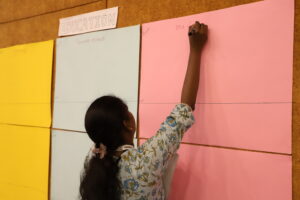
While statistics demonstrate the scale of an organisation’s work, it is the stories of individuals that reveal its true impact. One of the most memorable sessions of the workshop invited participants to share real-life stories from the field—stories of resilience, hope and transformation that reflected the heart of Children of India Foundation’s work.
Each story highlighted how timely intervention, community participation and sustained support can create lasting change in the lives of children and families.
Participants shared the journey of a young widow who, after years of hardship, was supported through health awareness programmes, educational guidance and emotional counselling. She successfully completed her secondary education, rebuilt her confidence and eventually remarried, creating a stable and hopeful future for herself and her family.
Another inspiring story was of Bharati, a seventeen-year-old girl who had dropped out of school due to financial difficulties and her mother’s poor health. Through continuous counselling, scholarship support and encouragement from the CIF team, she returned to education, successfully completed her Pre-University studies and is now pursuing a degree. Her story demonstrated how removing financial barriers and providing consistent guidance can change the trajectory of a young person’s life.
Participants also shared the story of Ajay, a young boy who had left school and spent most of his time using mobile phones and caring for livestock. With patient mentoring, educational support and regular follow-up by the field team, Ajay returned to school and began focusing once again on his studies, proving that every child deserves a second chance.
Another powerful example came from a girl who had dropped out of school following her father’s death and was engaged in ginger harvesting and mica collection to support her family. Through livelihood assistance, government linkages, educational support, vocational training and access to welfare schemes, she was able to continue her education. Today, she is pursuing her first year of college, illustrating how integrated support can break the cycle of poverty.
One of the most moving stories highlighted the journey of an adolescent girl from a Devadasi family who was living with HIV. Despite facing multiple layers of discrimination and social stigma, she received counselling, livelihood training and financial support through government schemes. Rather than being forced into the traditional Devadasi system, she established a tailoring business that now contributes to her family’s income, enabling her to lead a life of dignity and independence.
Participants also reflected on cases involving online exploitation, where awareness programmes on digital safety empowered children to seek help before situations escalated further. In one case, early reporting and coordinated intervention by parents, police and child protection authorities prevented further harm and ensured appropriate support for both children involved.
Each of these stories reinforced a common message: sustainable change is rarely achieved through a single intervention. It is built through trust, persistence, collaboration and the unwavering belief that every child deserves the opportunity to thrive.
Imagining the Future: What Should CIF Look Like in 2031?
The second day of the workshop shifted the focus from reflection to aspiration.
Participants were challenged to imagine that it was the year 2031. They were asked to write newspaper headlines describing what they hoped Children of India Foundation would have achieved by then.
The exercise inspired bold and hopeful visions.
Across groups, participants imagined communities where child marriage and child labour had been eliminated, where every child had access to quality education, and where families had sustainable livelihoods that removed the economic pressures forcing children out of school.
Many envisioned a future where children from Devadasi communities would no longer face discrimination or harmful traditional practices. Others imagined thousands of adolescent girls becoming leaders within their communities, actively influencing decisions that affect their lives.
Although each group presented different ideas, several common aspirations emerged.
Participants agreed that every child should live in a safe environment, free from violence, exploitation and abuse. They envisioned children becoming confident change-makers within their communities rather than passive beneficiaries of development programmes.
Education remained central to every discussion. Participants expressed a shared dream of ensuring that no child is denied education because of poverty, gender, disability or social discrimination. They also emphasised the need for stronger support systems that enable young people to access higher education, vocational training and meaningful employment opportunities.
Health and mental well-being also featured prominently in these discussions. Participants recognised that children require holistic support, including nutrition, emotional well-being, healthcare and safe environments, to reach their full potential.
These aspirations reflected more than organisational goals—they represented a collective vision for stronger communities where children are respected, protected and empowered to shape their own futures.
Addressing Emerging Challenges Together
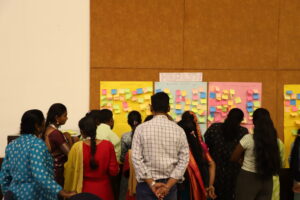
Recognising that the context surrounding children continues to evolve, participants engaged in a series of thematic group discussions focusing on emerging child protection and development challenges.
Five key themes guided these conversations:
- Child Marriage
- Child Labour
- Migrant Children
- Online Exploitation
- Devadasi Communities
Each group analysed the current situation, identified barriers and proposed practical solutions.
Discussions on child marriage highlighted that, despite stronger legislation and increasing awareness, harmful practices continue due to poverty, gender inequality and social pressure. Participants emphasised the importance of strengthening community engagement, empowering adolescent girls and improving coordination between local institutions.
The child labour group reflected on the growing impact of migration, financial insecurity and limited livelihood opportunities. Participants stressed that preventing child labour requires not only rescuing children from hazardous work but also creating sustainable income opportunities for families.
Conversations around migrant children drew attention to interrupted education, poor access to welfare schemes and increased vulnerability to exploitation. Participants proposed strengthening village-level livelihood opportunities so that migration becomes a choice rather than a necessity.
The group discussing online exploitation identified emerging concerns surrounding cyberbullying, online grooming, blackmail, unsafe gaming platforms and excessive screen time. Participants recognised that digital safety has become an essential component of child protection and recommended greater awareness among children, parents, teachers and communities.
The discussions on Devadasi communities highlighted the continuing challenges of discrimination, lack of documentation, misinformation regarding government schemes and limited livelihood opportunities. Participants stressed the importance of sustained advocacy, stronger government convergence and continued support for girls and women from affected communities.
Across all discussions, several common barriers emerged, including poverty, social norms, inadequate documentation, language barriers, family pressure and limited awareness. Participants agreed that addressing these challenges requires long-term collaboration between communities, government departments, schools, civil society organisations and children themselves.
Innovative Ideas for Lasting Change
Rather than stopping at identifying problems, participants focused on developing practical and community-led solutions.
Among the ideas proposed were:
- strengthening Gram Sabha meetings to increase awareness of child rights
- organising street plays, wall paintings and community campaigns
- improving coordination between Child Protection Committees and School Management Committees
- expanding livelihood opportunities to reduce distress migration
- strengthening counselling services for children and families
- increasing skill development and employment opportunities for vulnerable communities
- promoting digital safety education through student clubs
- improving access to government schemes
- encouraging greater participation of children in community decision-making
Participants emphasised that prevention is always more effective than intervention. Investing in awareness, education and community ownership would enable families and communities to protect children before risks escalate into crises.
Growing Like a Tree: Understanding Organisational Strength
One of the workshop’s most creative activities used the image of a tree to help participants reflect on the organisation’s growth.
The roots represented the core values and strengths that have enabled Children of India Foundation to grow over the years. Participants identified transparency, community trust, committed staff, strong partnerships and child-centred programming as the organisation’s strongest foundations.
The trunk symbolised the organisational systems that support every programme. Participants discussed the importance of strengthening internal processes, collaboration, learning and accountability to ensure sustainable growth.
The branches represented opportunities for expansion into new thematic areas, including early childhood development, mental health, research and emerging child protection issues.
The leaves reflected the programmes, activities and innovations that continue to nurture communities, while the fruits symbolised the long-term impact of CIF’s work—safe children, educated communities, sustainable livelihoods and empowered young people.
The exercise reminded participants that meaningful growth requires strong roots. Just as a healthy tree continues to flourish because of its foundation, an organisation achieves lasting impact by remaining grounded in its values while adapting to changing realities.
Together Towards Tomorrow
The Strategic Planning Workshop was far more than a four-day meeting. It was a celebration of the people, partnerships and communities that have shaped Children of India Foundation’s journey over the years.
It created a unique opportunity for staff from different states, backgrounds and programmes to learn from one another, celebrate achievements, openly discuss challenges and collectively imagine a stronger future for children across India.
The conversations throughout the workshop demonstrated that meaningful change is built through collaboration. Whether preventing child marriage, supporting children’s education, strengthening livelihoods, promoting health or protecting children from emerging risks in the digital world, every achievement has been made possible through the collective efforts of communities, government institutions, partners and dedicated field teams.
As Children of India Foundation embarks on the development of its Strategic Plan 2026–2031, the organisation carries forward not only ideas and recommendations but also the experiences, aspirations and collective wisdom of the people who work tirelessly alongside children every day.
The workshop reaffirmed that strategic planning is most powerful when it is participatory, inclusive and grounded in the realities of the communities an organisation serves. It is through listening, learning and working together that sustainable solutions emerge.
The road ahead will undoubtedly present new challenges. Yet the workshop left participants with a renewed sense of purpose and optimism. Guided by its core values and strengthened by the voices of its staff and communities, Children of India Foundation is well positioned to continue creating lasting change for vulnerable children and families.
Together, the organisation moves forward with a shared vision—one where every child is safe, every child learns, every family has the opportunity to thrive, and every community becomes a champion for children’s rights.
Because building a better tomorrow begins by building it together.